
Top Leadership Skills Every Manager Needs in Today's Workplace
Published on June 02, 2026 | Leadership Development | 10 Min Read
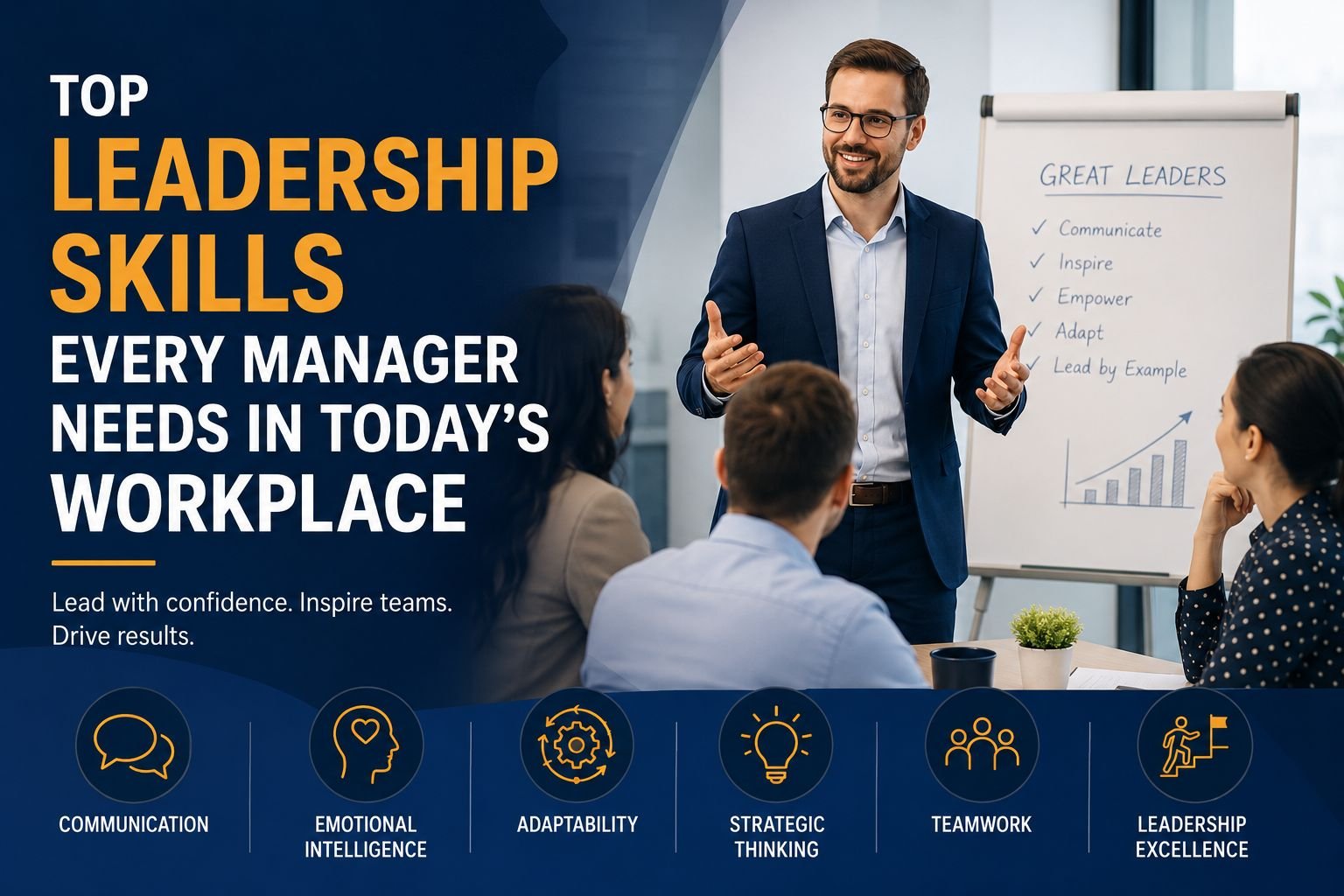
What Are Leadership Skills?
Leadership skills are the abilities that help managers guide, motivate, communicate with, and develop employees while achieving organizational goals. These skills include communication, emotional intelligence, decision-making, strategic thinking, adaptability, and team management.
In today's workplace, leadership skills are essential because managers are expected to do more than supervise tasks. They must inspire teams, manage change, build workplace culture, and drive business performance.
Why Are Leadership Skills Important for Managers?
Leadership skills directly influence:
- Employee engagement
- Team productivity
- Workplace culture
- Innovation
- Employee retention
- Business growth
Research consistently shows that employees are more likely to remain committed to organizations where managers provide clear communication, coaching, support, and growth opportunities.
Strengthen Leadership Capabilities Across Your Organization
Discover leadership development programs, executive coaching, and business consulting solutions designed to help managers lead with confidence and drive organizational success.
Explore Leadership SolutionsKey Benefits of Strong Leadership
| Leadership Benefit | Organizational Impact |
|---|---|
| Better Communication | Improved Team Alignment |
| Higher Employee Engagement | Increased Productivity |
| Effective Coaching | Stronger Talent Development |
| Strategic Thinking | Better Business Outcomes |
| Accountability | Improved Performance |
| Innovation | Competitive Advantage |
Leadership Development in Today's Workplace
At GIFTT Consulting, we work with managers, business leaders, and professionals across industries. Through leadership development programs, business consulting engagements, and executive coaching initiatives, we have observed that high-performing managers consistently demonstrate a core set of leadership competencies that enable them to drive results while building strong teams.
The following leadership skills have become increasingly important as organizations navigate digital transformation, hybrid work environments, and evolving employee expectations.
15 Essential Leadership Skills Every Manager Needs
1. Communication Skills
Communication is the most important leadership skill because it impacts every aspect of team performance.
Managers must:
- Communicate expectations clearly
- Listen actively
- Provide constructive feedback
- Share information transparently
- Facilitate meaningful discussions
Why Communication Matters
Employees perform better when they understand their responsibilities and how their work contributes to organizational goals.
2. Emotional Intelligence
Emotional intelligence is the ability to understand and manage emotions while effectively responding to the emotions of others.
Managers with strong emotional intelligence can:
- Build trust
- Handle workplace stress
- Resolve conflicts
- Demonstrate empathy
- Strengthen workplace relationships
Components of Emotional Intelligence
- Self-awareness
- Self-regulation
- Empathy
- Social skills
3. Adaptability
Modern workplaces change rapidly due to technology, market conditions, and customer expectations.
Adaptable leaders:
- Embrace change
- Learn continuously
- Remain resilient
- Support organizational transformation
4. Strategic Thinking
Strategic thinking helps managers align daily activities with long-term business objectives.
Key capabilities include:
- Planning
- Goal setting
- Opportunity identification
- Risk management
- Resource allocation
Organizations often use business consulting services to align leadership strategies with long-term business goals.
5. Decision-Making
Strong decision-making enables managers to respond effectively to challenges and opportunities.
Effective decision-makers:
- Analyze information
- Evaluate alternatives
- Consider risks
- Act confidently
- Take accountability
6. Team Building and Collaboration
High-performing organizations depend on collaboration.
Managers should:
- Promote teamwork
- Encourage inclusivity
- Build trust
- Recognize contributions
- Support cross-functional cooperation
7. Conflict Resolution
Conflict is unavoidable in any workplace.
Successful managers:
- Listen objectively
- Focus on facts
- Encourage dialogue
- Seek mutually beneficial solutions
8. Coaching and Mentoring
Leadership today involves developing people rather than simply directing work.
Coaching helps employees:
- Build confidence
- Improve performance
- Develop new skills
- Advance their careers
Participation in leadership training programs can help managers improve coaching, mentoring, and employee development skills.
Transform Ideas into Success with Expert Guidance
Partner with us for Business Consulting, Project Management, Phygital Marketing solutions, and Psychology Training-cum-Internship Programs that combine academic excellence with real-world experience.
Get Started Today9. Accountability
Accountability creates trust and drives performance.
Accountable leaders:
- Honor commitments
- Set clear expectations
- Measure results
- Lead by example
10. Problem-Solving
Managers regularly face challenges involving people, processes, and performance.
Strong problem-solvers:
- Identify root causes
- Analyze situations objectively
- Develop practical solutions
- Learn from outcomes
11. Delegation
Effective delegation empowers employees and improves productivity.
Benefits include:
- Better workload distribution
- Employee development
- Increased efficiency
- Stronger engagement
12. Innovation and Creativity
Organizations require leaders who encourage innovation and continuous improvement.
Innovative managers:
- Welcome new ideas
- Support experimentation
- Encourage learning
- Challenge outdated processes
Organizations that embrace digital transformation strategies are often better positioned to drive innovation and business growth.
13. Time Management
Effective managers prioritize activities that create the greatest impact.
Important practices include:
- Planning
- Prioritization
- Delegation
- Goal setting
14. Diversity and Inclusion Leadership
Modern leaders must create inclusive workplaces where employees feel respected and valued.
Inclusive leadership promotes:
- Better decision-making
- Greater innovation
- Stronger collaboration
- Improved employee engagement
15. Vision and Inspiration
Visionary leaders help employees understand the bigger picture.
They:
- Communicate purpose
- Inspire action
- Create alignment
- Drive long-term growth
Leadership Trends Every Manager Should Watch in 2026
AI-Augmented Leadership
Managers increasingly use AI tools to improve decision-making, productivity, and workforce planning.
Hybrid Workforce Leadership
Leading distributed teams requires strong communication, trust-building, and collaboration skills.
Human-Centered Leadership
Organizations are placing greater emphasis on employee well-being, engagement, and workplace culture.
Continuous Learning
Future-ready leaders encourage ongoing learning and skill development.
Common Leadership Mistakes Managers Should Avoid
Micromanagement
Excessive control can reduce employee confidence and innovation.
Poor Communication
Lack of clarity often creates confusion and frustration.
Failure to Delegate
Managers who try to do everything themselves limit team growth.
Ignoring Employee Development
Professional growth opportunities significantly impact employee retention and engagement.
Avoiding Difficult Conversations
Addressing issues promptly helps maintain accountability and trust.
Corporate Certifications That Prepare You for Tomorrow
Gain in-demand skills through expert-led certification programs in Business Consulting, Project Management, Digital Marketing, Business Leadership, and Technology.
Enroll NowFinal Thoughts
Leadership skills are no longer optional for managers—they are essential for organizational success. As workplaces continue to evolve, managers must develop communication, emotional intelligence, adaptability, strategic thinking, coaching, accountability, and decision-making capabilities to lead effectively.
Organizations that invest in leadership development create stronger teams, improve employee engagement, enhance workplace culture, and position themselves for long-term business growth. Managers who continuously strengthen these leadership competencies will be better equipped to navigate change, inspire employees, and achieve sustainable success.
Frequently Asked Questions
What are leadership skills?
Leadership skills are the abilities that help managers guide, motivate, communicate with, and develop employees while achieving organizational goals.
What is the most important leadership skill?
Communication is widely considered the most important leadership skill because it influences trust, collaboration, and performance.
Why is emotional intelligence important in leadership?
Emotional intelligence helps managers build relationships, manage stress, resolve conflicts, and create positive workplace cultures.
Can leadership skills be learned?
Yes. Leadership skills can be developed through training, coaching, mentoring, experience, and continuous learning.
How do leadership skills improve employee performance?
Strong leadership increases employee engagement, motivation, productivity, accountability, and job satisfaction.
What leadership skills are most important for remote teams?
Communication, emotional intelligence, adaptability, trust-building, and collaboration are particularly important in remote and hybrid workplaces.
About GIFTT Consulting
GIFTT Consulting is a professional consulting and leadership development organization focused on business consulting, leadership training, project management, digital transformation, and executive development programs. Through practical learning and industry-focused solutions, GIFTT Consulting helps professionals, managers, and organizations strengthen leadership capabilities and achieve sustainable business growth.